
Why Is Scalp Analysis Important Before and After a Hair Transplant?
Hair transplantation involves more than the procedure itself. Professionals also need to monitor scalp and hair conditions over time.
Before a transplant, they need to understand the scalp environment, hair distribution, and hair thickness. This information can support pre-procedure assessments and client consultations. After the procedure, scalp and hair conditions may change throughout the recovery process. Therefore, regular monitoring is also important.
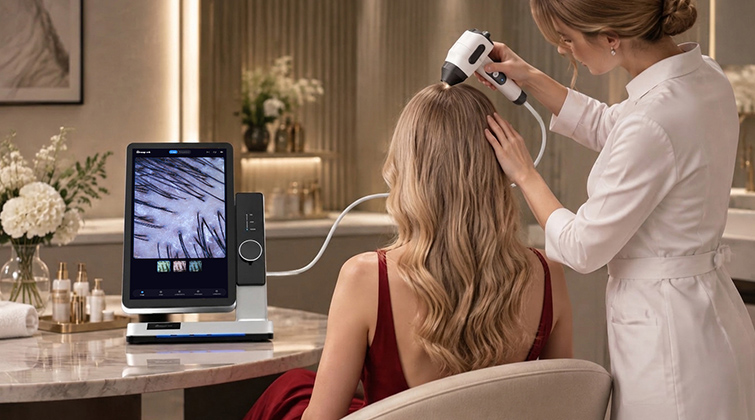
However, visual checks alone may not reveal every detail. A professional scalp analyzer can provide clearer images and relevant data. Professionals can then compare these findings during follow-up visits.
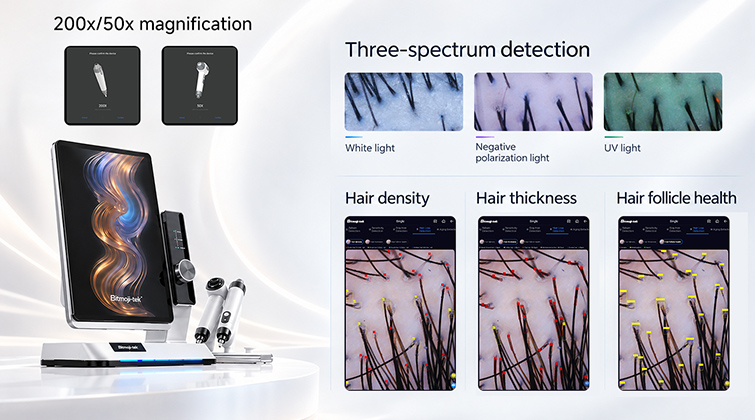
The Bitmoji-tek T8 AI Scalp Analyzer combines multiple scalp and hair analysis indicators with 50× and 200× detection handpieces. It also supports before-and-after comparisons. Together, these features help professionals observe scalp and hair conditions before and after hair transplantation.
Before Hair Transplantation: Establish a Baseline
Before a transplant, professionals need to understand the scalp environment and hair distribution in the areas being examined.
First, the T8 analyzes indicators such as oil, moisture, sensitivity, redness maps, sensitivity heat maps, and scalp texture. These results help professionals document the scalp’s baseline condition. They can also serve as a reference for future monitoring.
The T8 also supports the observation of empty follicles, single-hair follicles, double-hair follicles, triple-hair follicles, and multiple-hair follicles. In addition, it identifies different hair types, including new hair, vellus hair, fine hair, medium hair, and coarse hair.
These indicators provide a clearer view of hair distribution and hair thickness in the examined area.
Moreover, saving baseline records helps establish a reference for later comparisons. To make these comparisons more meaningful, professionals should keep the examination area, magnification, and imaging conditions as consistent as possible.
After Hair Transplantation: Monitor Changes in Scalp and Hair Conditions
After a transplant, scalp conditions and hair appearance may change over time. Regular examinations help professionals record these changes and discuss them with clients.
Monitor Scalp Conditions
The T8 analyzes oil, moisture, sensitivity, and related scalp images. These features help professionals observe and document scalp conditions at different stages.
However, the results do not replace a clinical assessment of post-transplant recovery. Medical professionals should interpret them alongside other relevant findings.
Observe Hair Distribution and Thickness
Hair density, hair thickness, and hair type indicators provide useful references for monitoring hair conditions.
If the software supports quantitative analysis of the same area, professionals can also compare changes in the relevant data over time.
Still, changes in hair images or analysis results alone cannot confirm graft survival. They also cannot determine the final outcome of a hair transplant.
Compare Results Over Time
The T8 supports before-and-after comparisons. By saving images and data from different time points, professionals can review changes in the examined area.
This helps them explain observed differences more clearly during follow-up consultations.
At the same time, hair growth after transplantation occurs in stages. Therefore, professionals should consider the appropriate follow-up timeline and clinical assessments. A single examination cannot provide a complete picture of the final outcome.
How Does Bitmoji-tek T8 Support Hair Transplant Analysis?
Multi-Dimensional Scalp and Hair Analysis
The T8 covers indicators such as oil, moisture, sensitivity, scalp texture, hair density, hair thickness, and different hair types.
By combining images and data, professionals can gain a broader understanding of scalp and hair conditions. These findings can also support professional consultations and follow-up observations.
In addition, professionals can review follicle-related images and hair growth patterns. This information may help them better understand the examined area. However, treatment and transplant planning should remain based on a qualified professional’s assessment.
50× and 200× Detection Handpieces
The T8 comes with two detection handpieces to support different examination needs.
The 50× handpiece is suitable for observing local scalp and hair distribution. Meanwhile, the 200× handpiece helps professionals examine finer details of the scalp and hair structures.
The level of detail available depends on the actual imaging performance and supported software functions.
Before-and-After Comparison
The comparison function of T8 helps professionals review examination records from different stages.
By collecting images and data under consistent conditions, they can present changes in scalp and hair conditions more clearly. This also provides useful references for follow-up consultations.
How Can Scalp Analysis Improve Client Communication?
For hair transplant clinics and professional scalp care centers, clear examination results can support both professional analysis and client communication.
First, the T8 provides scalp images and analysis data that help professionals explain their findings. Instead of relying only on verbal descriptions, they can use visual information to show clients their scalp environment, hair distribution, and hair thickness.
Next, the before-and-after comparison function supports follow-up discussions. Professionals can review records from different time points and explain the changes they observe. As a result, clients can better understand the monitoring process rather than relying only on their own impressions.
In addition, saved records help clinics maintain client files. These records can serve as references for future consultations and follow-up visits.
With regular monitoring and professional interpretation, clinics can make client communication clearer and more structured. However, scalp analysis results should support professional discussions. They cannot replace a clinical assessment of transplant outcomes or post-procedure recovery.
Conclusion
Scalp analysis before and after hair transplantation helps professionals document scalp conditions, hair distribution, and hair thickness.
The Bitmoji-tek T8 combines multiple analysis indicators, 50× and 200× detection handpieces, and before-and-after comparison features. These capabilities support the observation of scalp and hair conditions throughout the transplant journey.
With clearer images and records over time, professionals can better understand changes in the examined areas. They can also use these findings to support client communication and follow-up monitoring.